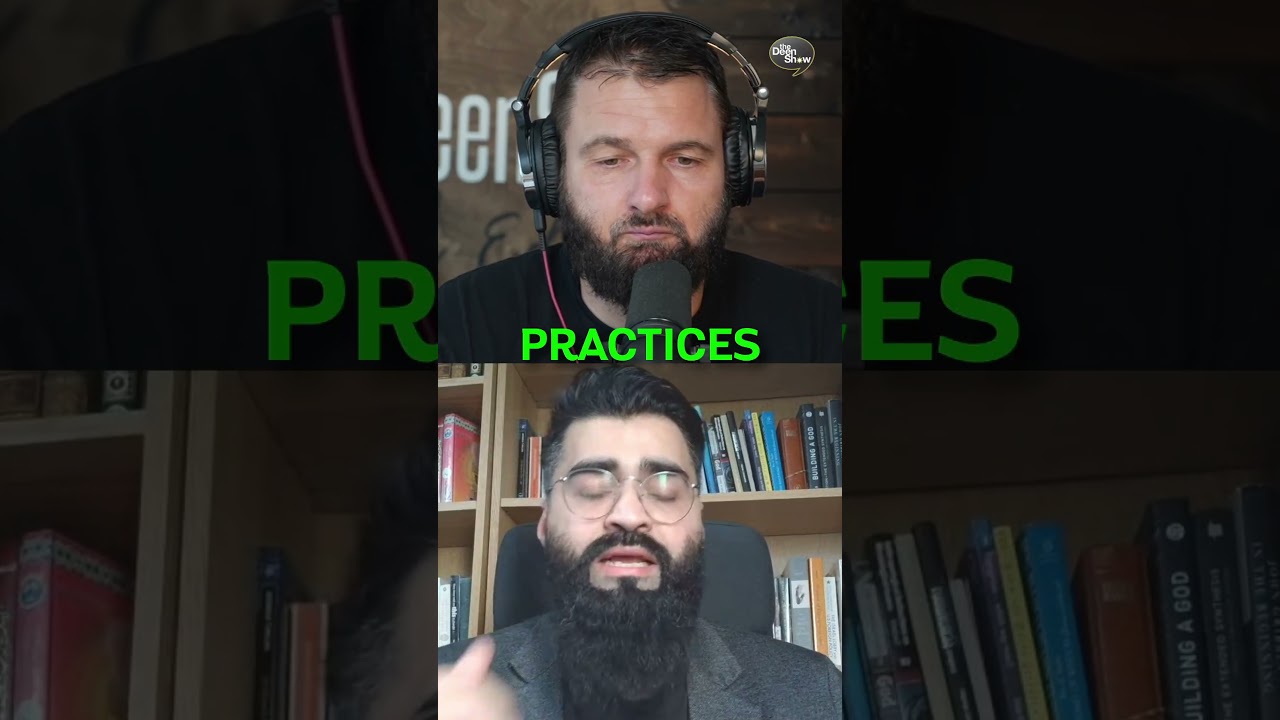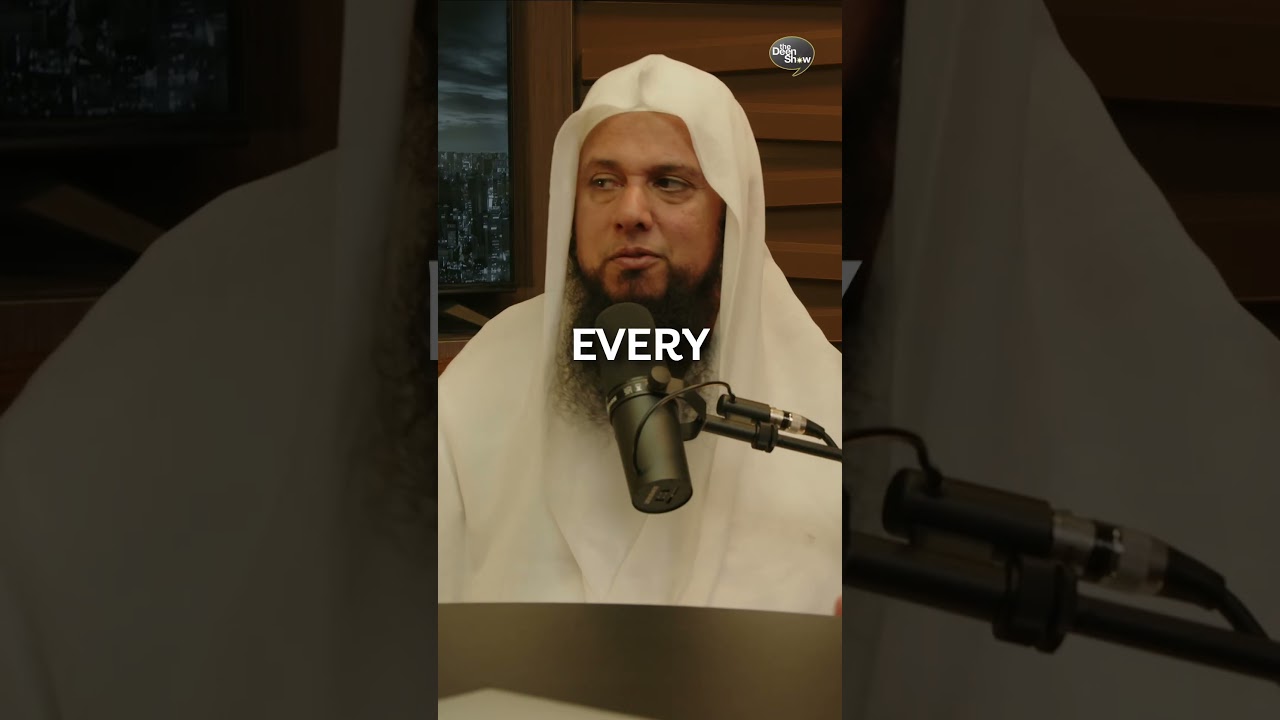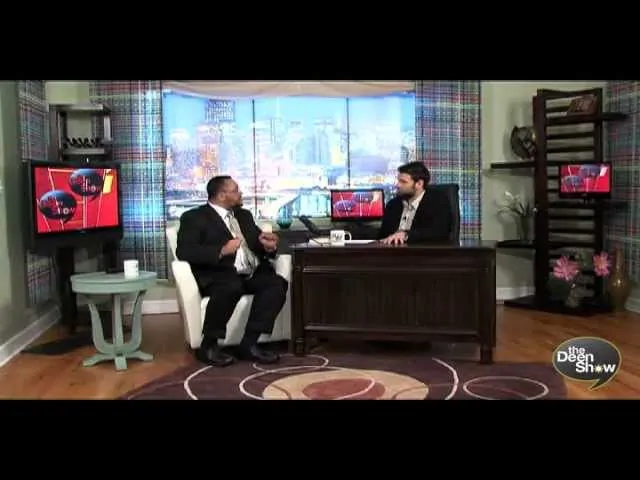
Few questions in contemporary discourse have been as deliberately distorted as this one: is Islam a religion of extremism? On this episode of The Deen Show, host Eddie sits down with Imam Mustafa Zade — author of The Lies About Muhammad — to dismantle one of the most persistent misrepresentations of our faith. The answer is not merely a defence; it is rooted in the Quran, the authentic Sunnah of Prophet Muhammad ﷺ, and fourteen centuries of Islamic scholarship that consistently affirm a single, unambiguous truth: Islam does not produce radicalism — it is its very antidote.
Peace Is Not a Slogan in Islam — It Is a Legal Obligation
According to Imam Mustafa Zade, any serious student of Islamic law will quickly discover that the overarching theme of the Shari’ah is peace — mandated, structured, and layered outward from the individual to the entire community. Prophet Muhammad ﷺ went so far as to make the spreading of peace among believers a condition for entering Paradise. In one remarkable hadith, the Prophet ﷺ illustrated the weight of neighbourhood rights by stating that violating one’s neighbour’s sanctity — even in a sin already considered grave — carries a uniquely heavy punishment, because the neighbour represents one’s immediate circle of mandated peace, whose disruption can fracture an entire town or city. This framework of peace radiates in every direction: from the self, to the family, to the neighbour, to society at large. Critically, the Prophet ﷺ also warned against going to extremes even in acts of worship — when companions vowed to pray all night forever, fast without end, and never marry, he corrected them swiftly and publicly, making clear that moderation is not a compromise in Islam but a divine command. Allah ﷻ created this religion to be easy, and any attempt to push it beyond its balanced, prophetically defined boundaries — whether in personal devotion or in dealings with others — is itself a violation of the faith.
- Spreading the salaam is a prophetic condition for attaining Paradise — it is a structured legal obligation, not optional courtesy.
- Neighbourhood rights carry exceptional weight in Islamic law, reflecting how deeply community peace is protected at every level.
- Extremism in worship is explicitly forbidden — Islam’s balance encompasses prayer and sleep, fasting and breaking the fast, solitude and family life.
- Allah ﷻ wills ease, not hardship — “Allah does not want to place you in difficulty” is not a concession but a foundational divine principle (Quran 2:185).
- Kindness earns unique divine reward — the Prophet ﷺ taught that Allah rewards for mercy and gentleness in a way He rewards for nothing else.
“I fast and I break my fast. I sleep, and I marry women. Whoever overlooks my Sunnah does not belong to me.”
— Prophet Muhammad ﷺ, correcting those who vowed to push their religion to an extreme
There Are Radicals. There Is No “Radical Islam.”
Imam Mustafa Zade draws a distinction that is as clear as it is consequential: there are radicals — criminals, individuals driven by political grievance, and those manipulated by bad actors — and then there is Islam. These are not two points on the same spectrum; they are entirely separate categories. When Pastor Terry Jones threatened to burn the Quran before his tiny congregation, no serious commentator labelled the act “radical Christianity” — every reasonable person correctly identified it as the behaviour of a fringe extremist whose actions had nothing to do with the Christian faith. Islam deserves precisely the same intellectual honesty. Criminals do not define religions; Jeffrey Dahmer does not teach us what the American Constitution means, and a violent individual who shouts Islamic phrases tells us nothing about the Quran or the Prophet ﷺ. Those who genuinely want to understand Islam are directed to its primary sources — not to the statements of violent individuals who contradict both. The Prophet ﷺ himself made the Islamic position on self-destruction unmistakably clear: a warrior in his own time who — after fighting courageously in a legitimate battle — took his own life to escape pain was declared by the Prophet ﷺ to be destined for Hellfire. If killing oneself under such circumstances carries that weight, then strapping explosives onto one’s body and deliberately killing innocent civilians — people the Prophet ﷺ explicitly commanded must never be harmed — is among the most severely punished acts in all of Islamic law. Those who commit such crimes do so in defiance of the Prophet ﷺ, not in his name.
- There is no “radical Islam” — there are radicals who claim Islam, just as criminals can claim any identity without representing it.
- Suicide bombing is categorically forbidden in Islam — the Prophet ﷺ condemned self-inflicted death even on the battlefield, let alone targeting unarmed civilians.
- Indiscriminate killing of innocents is among the most severely punished offences under Islamic law; women, children, and non-combatants are protected without exception.
- Media generalisation is a deliberate distortion — filming the most dangerous block in a city and calling it “America” is as misleading as filming a poverty-stricken village and calling it “Islam.”
- There is one Islam — one God, one Quran, one final Prophet ﷺ. No criminal can manufacture a “brand” of Islam that supersedes fourteen centuries of authentic scholarship.
- Muslims bear accountability too — cultural practices that oppress women or harm communities are condemned by Islam itself; those who commit them are criminals in the religion’s own eyes.
“Allah subhana is gentle and kind, and He likes kindness and mercy in everything and about everything — and He rewards for kindness and mercy like He does not reward for anything else.”
— Prophet Muhammad ﷺ, as shared by Imam Mustafa Zade on The Deen Show
Walking Tall With the True Message of Islam
The episode closes with a call that is both spiritual and deeply practical. Imam Mustafa Zade urges Muslims not to be defensive — but to walk tall, to know their faith with clarity and depth, and to share it with neighbours, colleagues, and communities gently, confidently, and without apology. The same Islam that the Prophet ﷺ used to win over a Bedouin who urinated in the mosque — not through rage or punishment, but through patient instruction and extraordinary kindness — is the very Islam equipped to answer every distortion circulated in media and public discourse today. For the non-Muslim reader, the invitation is equally sincere: do not learn about Islam from criminals; do not define a community of nearly two billion believers by the actions of a fraction of a percent; and do not mistake cultural dysfunction or political violence for divine guidance. Read the Quran. Study the life of the Prophet ﷺ. Give yourself the genuine opportunity to encounter Islam as it has always been — a complete, balanced way of life, built on submission to the One Creator, moderation in all affairs, and an uncompromising, prophetically mandated commitment to peace.