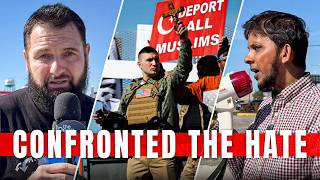
Few questions stir more confusion — and more deliberate misinformation — than this one: does the Quran instruct Muslims to kill non-believers? The short answer is an emphatic no. The longer answer requires understanding one of the most misquoted passages in religious history, and confronting a pattern of selective citation that strips scripture of its meaning, its historical context, and its soul. Islam, a faith whose Prophet is described as “a mercy to all the worlds,” cannot be reduced to a license for indiscriminate violence — and any honest, contextual reading of the Quran makes this undeniably clear.
The “Sword Verse” Restored to Its True Historical Context
The verse most commonly weaponised against Islam is found in Surah At-Tawbah (Chapter 9, Verse 5), almost always quoted in isolation, stripped of everything around it. Surah At-Tawbah opens with an essential backdrop: a formal peace treaty between the early Muslim community and the Mushrikeen (polytheists) of Mecca — a treaty those same Mushrikeen then deliberately and repeatedly violated. By the time verse 5 is reached, Allah subhanahu wa ta’ala is issuing a battlefield ultimatum: after a four-month grace period during which the treaty-breakers could repent, make peace, or depart, the Muslims were permitted to defend themselves in open warfare. This is not a standing divine order to hunt down kafirs on the street. It is a specific military command in an active theatre of war, with built-in mercy clauses that classical scholars have catalogued and explained for fourteen centuries. Any army general, in any era, rallies soldiers on the battlefield with direct instruction — that is precisely what this verse does, and no more. Critically, the very next verse (9:6) commands Muslims to grant safe passage to any enemy who seeks peace — a command that critics of Islam almost never quote.
- Context is not optional: Surah At-Tawbah’s opening verses describe a broken peace treaty, not a timeless declaration of war against all non-Muslims everywhere.
- Verse 5 is battlefield instruction: It addresses an active military conflict — identical in nature to how any nation’s rules of engagement address enemy combatants who have broken a signed agreement.
- Verse 6 immediately follows with mercy: Safe passage must be granted to any enemy who seeks peace — a command of profound restraint that invalidates the “kill all kafirs” reading entirely.
- Classical scholarship is unanimous: Fourteen centuries of Islamic legal and Quranic scholarship agree this passage refers to a specific, bounded historical event.
- The Quran forbids compulsion unambiguously: “There is no compulsion in religion” (Al-Baqarah 2:256) is unconditional and applies to all of humanity without exception.
- The Prophet ﷺ protected non-Muslims by law: Harming a non-Muslim under Islamic protection (a mu’ahad) is listed among the gravest offences a Muslim can commit.
“Whoever kills a mu’ahad (a non-Muslim living under the protection of the Islamic state) will never smell the fragrance of Paradise, although its fragrance may be detected from a distance of forty years.”
— Prophet Muhammad ﷺ (Narrated by al-Bukhari, no. 6914)
What Islam Actually Teaches: A Faith Rooted in Mercy, Not Hatred
The Prophet Muhammad ﷺ wept for those who disbelieved — not out of contempt, but out of a sorrow so profound that Allah recorded it in the Quran: “Perhaps you would kill yourself in grief over them, because they believe not in this narration” (Al-Kahf 18:6). That is the true character of the man being misrepresented as a teacher of hatred. Islamic law, from its earliest expression, built robust protections for non-Muslims directly into governance: the covenant of Khalid ibn al-Waleed guaranteed monthly stipends for elderly and impoverished Christian citizens of al-Heerah; the Prophet ﷺ personally visited his Jewish servant on his deathbed; and Islamic legal tradition guarantees freedom of worship, security of property, and personal safety for all non-Muslims living within an Islamic society. The distinction Islam draws is never between races, ethnicities, or skin colours — the Prophet ﷺ declared explicitly that no Arab has superiority over a non-Arab except in piety. Our shared humanity, the fact that all of us are children of Adam, is precisely where the Islamic relationship with every non-Muslim begins.
“And We have sent you, O Muhammad, not but as a mercy for the worlds.”
— The Quran, Surah Al-Anbiya’ (21:107)
The question deserves a direct, evidence-based answer: no, the Quran does not issue a blanket command to harm non-believers. What it contains are battlefield instructions bound to a specific, documented historical context — a broken treaty, a four-month ultimatum, and an active war — framed on both sides by verses commanding mercy, safe passage, and restraint. Taken in full, as any text of guidance and spirituality must be, the Quran and the Sunnah of the Prophet ﷺ paint a picture of a faith built on divine mercy, human dignity, and the radical equality of all people before God. For any sincere seeker — Muslim or non-Muslim — the path forward is the same: read with context, study with honesty, and allow the full weight of the evidence to speak, rather than the soundbites of those who profit from misrepresentation. Islam’s door of understanding, like its door of faith, remains open to all.