Before the revelation of the Qur’an, the Arabian Peninsula — and much of the world — was submerged in darkness. Tribes warred over petty grievances, the powerful exploited the weak, women possessed no rights, and infant daughters were buried alive. Humanity, despite its inherent dignity as the children of Adam, had lost its moral compass entirely. Then, over twenty-three years, Allah subhanahu wa ta’ala sent down the words that would alter the course of human civilisation — the Noble Qur’an — a book not merely for the Arabs or for Muslims, but hudā lil-nās: divine guidance for all of mankind, regardless of race, language, or background.
The World Before the Qur’an: Tribalism, Oppression, and Moral Collapse
To appreciate what the Qur’an changed, we must first understand the depth of the darkness it replaced. Pre-Islamic society was defined by arrogance, tribalism, and the enslavement of human beings — not merely in physical chains, but in blind worship of wealth, status, ego, and desire. The rich crushed the poor. The Quraysh believed themselves superior to all other tribes. Women were treated as property, not as people carrying honour. Allah subhanahu wa ta’ala reminds us of this reality in the Qur’an as a testament to His greatest blessing upon us — the gift of revelation, of faith, and of brotherhood where only enmity had existed before.
- Racial and tribal supremacy was the norm — lineage determined a person’s worth, not character or virtue
- Women had no legal rights — female infants were buried alive without remorse
- The rich oppressed the poor with no accountability; strength alone determined justice
- Society was fractured by blood feuds and endless cycles of war over trivial matters
- Humanity was enslaved — to dinar, to status, to other human beings — with no spiritual path to true freedom
- Spiritual guidance was absent — people were followers, but blind followers, with no knowledge, no open heart, no sincere purpose
“Remember the favour of Allah upon you — when you were enemies and He united your hearts, and by His favour you became brothers.” — Qur’an, Surah Al-Imran (3:103)
How the Qur’an Transformed the World: From Darkness to Divine Light
The Qur’an did not merely introduce a new religion — it sparked a complete revolution of the human soul and of human civilisation. It led people from darkness to light, from falsehood to truth, from division to unity, from hatred to love rooted in the sincere worship of Allah alone. The Qur’an came as a dhikr — a perpetual reminder — because Allah, who created us, knows the forgetfulness of our nature. It freed the enslaved, not only from physical bondage but from servitude to ego, materialism, and human masters, liberating men and women to become servants of Allah alone, which is the highest station of dignity any human being can attain. Among its most profound contributions to humanity are these transformations:
- From ignorance to knowledge: The Qur’an opened blind minds and deaf hearts, producing people of genuine understanding, open eyes, and sincere spirituality
- From tribalism to brotherhood: In Islam, no Arab is superior to a non-Arab, and no white is superior to a black — honour belongs only to those with taqwa, consciousness of Allah
- From slavery to freedom: The Qur’an freed humanity from servitude to wealth, power, and other people — directing every soul toward the true liberation of worshipping Allah alone
- From hatred to love: Islam is a religion of mercy, not hostility — the Prophet ﷺ built an ummah whose defining mark was love and care for one another and for all of creation
- From war to peace: Allah Himself is As-Salaam — the source of all peace — and the Qur’an calls every human being back to that peace, which cannot be found anywhere else
- From self-interest to communal care: Even in prayer, Muslims are taught not to say “guide me” but “guide us” — a faith that removes selfishness at its root
“None of you truly believes until he loves for his brother what he loves for himself.” — Prophet Muhammad ﷺ (Sahih al-Bukhari & Sahih Muslim)
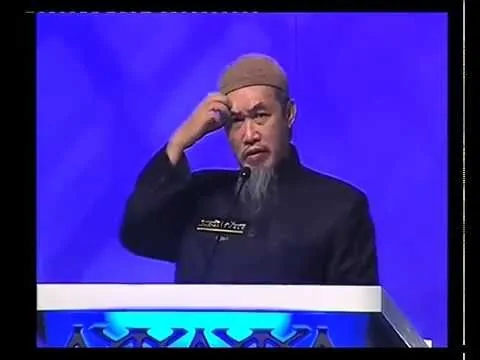
The Qur’an is not merely a text to be recited — it is a living force that reshapes human beings from within, and through them, reshapes the world. One of the speakers at this gathering bore witness to this personally: once a man who returned insult for insult, who raised his voice against his own mother, he spent over twenty years in patient, loving da’wah to his family after the Qur’an changed him. At his mother’s deathbed, he pleaded with her to say the shahadah — and in her final breaths, she did. That is the power of this Book: it transforms you first, then radiates outward to everyone you love. If we want to see the Qur’an’s transforming power re-emerge in our families, our communities, and our world, we cannot be passive recipients of its guidance — we must carry it to others with wisdom, gentleness, and sincerity. Share a translated copy with a neighbour who has not yet encountered Islam. Speak of it with conviction rooted in love, not condescension. And above all, let it first change us — so that the world, through us, may be changed once again, as it was changed fourteen centuries ago by those who took its words not merely to their lips, but to their hearts.