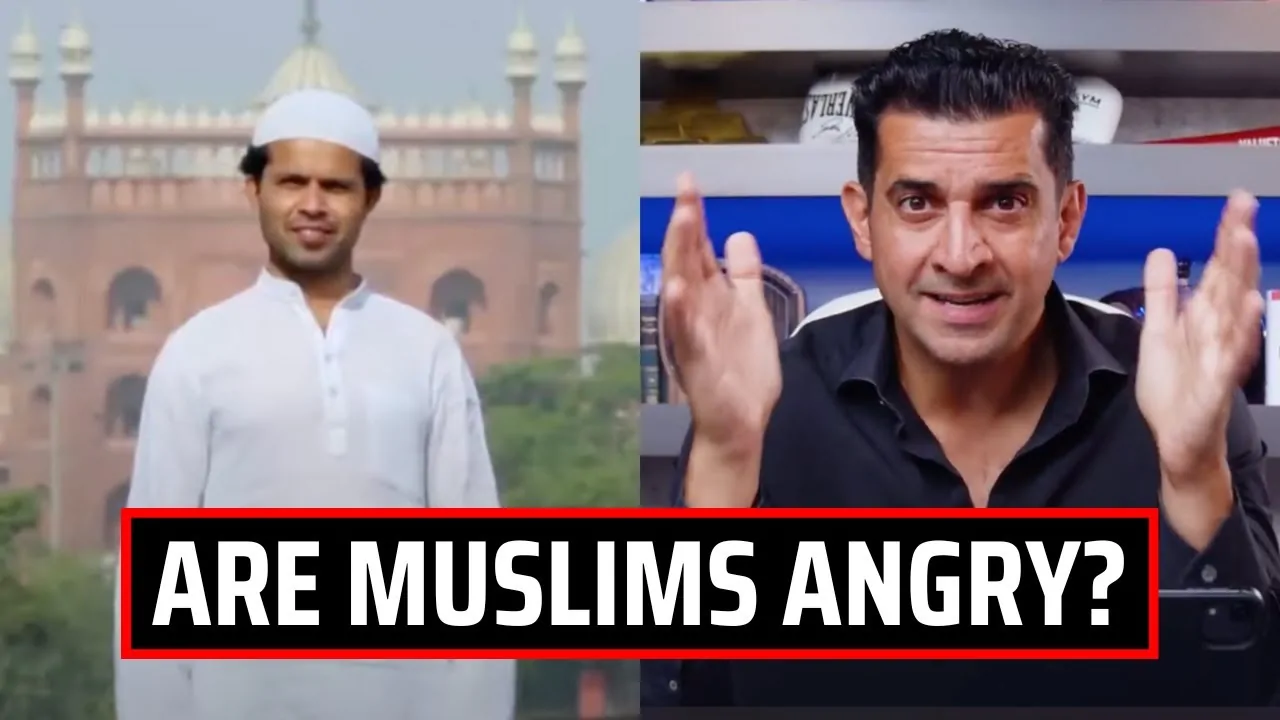
A recent PBD Podcast episode asked whether the stereotype of Islamic extremism is a fair one, even going so far as to suggest that Muslims are violent because of Prophet Muhammad (peace be upon him). This is a claim that deserves a thorough, fact-based response. On The Deen Show, we sat down to break apart this stereotype and put the truth front and center — because when you look at the actual teachings of Islam and the documented life of the Prophet, the narrative of violence crumbles completely.
The Word “Islam” Itself Means Peace
The very foundation of Islam is rooted in peace. The Arabic word “Islam” shares the same root as salaam — peace. Every time Muslims greet one another with “Assalamu Alaikum,” they are saying “peace be upon you.” How can a faith whose every interaction begins with a prayer for peace be honestly labeled as violent? The stereotype does not hold up against even the most basic understanding of what Islam represents at its core.
Extremism Has No Religion — The Data They Left Out
Extremism is an act — it can be done by a person of any faith or no faith. Muslims do not have a monopoly on it. If we are going to define extremism comprehensively, then every act of gun violence, every domestic abuse case, every unjust military occupation must be included. When you broaden the definition honestly, the entire picture changes.
- Over 500,000 people have died from gun violence in the United States in the last 25 years — none of it labeled “Christian terrorism”
- Millions of cases of domestic violence occur annually in the U.S. — not attributed to any religion
- European colonial empires — British, French, Spanish, Portuguese — destroyed cultures and oppressed nations across continents for centuries, yet history does not call this “Christian extremism”
- The Crusades, the KKK, the Oklahoma City bombing, abortion clinic attacks — all carried out by those identifying as Christian, yet Christianity is never blamed as a whole
- The French think tank behind the study cited on the PBD Podcast has a well-documented history of bias, having come from a nation that occupied Muslim lands across North Africa
Prophet Muhammad: A Legacy of Mercy, Not Violence
If Prophet Muhammad (peace be upon him) were violent, how did he honor mothers by declaring that Paradise lies at their feet? If he were violent, why did he command kindness to neighbors, forgive his enemies, stop the killing of infant girls, abolish intoxicants, and tear down racism in his society? Every single one of these is the action of a man of extraordinary mercy and compassion — not violence.
- He forgave his enemies — When he peacefully entered Mecca after years of persecution, he pardoned everyone, declaring “Go, you are free”
- He championed justice for all — Before prophethood, he joined the Hilf al-Fudul (Pact of the Virtuous), uniting people of different faiths to fight oppression and protect the vulnerable
- He elevated the status of women — In an era of female infanticide, he declared daughters a blessing and gave women rights to inheritance, education, and dignity
- He stood for the oppressed — His life mission was to remove injustice from society, protect the weak, and establish mercy as the standard for human interaction
- He was titled the Prince of Peace — Not for two years or a single era, but his message of peace extends for all eternity
Separating the Faith from the Actions of Individuals
The truth is simple: you cannot judge Islam by the actions of misguided individuals any more than you can judge Christianity by the Crusaders or the KKK. Islam’s teachings are clear — peace, justice, mercy, and compassion are the pillars of this faith. We invite Patrick Bet-David, Charlie Kirk, and anyone with sincere questions to sit down, open the Quran, and discover what Islam actually teaches. Prophet Muhammad (peace be upon him) set the example over 1,400 years ago by uniting people of different backgrounds on common ground. Today, Muslims and Christians can come together to protect our children, defend family values, and build a society rooted in goodness. That conversation starts with seeking the truth — and the truth about Islam is one of mercy, justice, and enduring peace.